Dental professionals will encounter disruptive or hard to manage patients during their career. Examples of these disruptive encounters include workplace violence, nonadherence to medical treatments, and manipulation of caregivers. This course explores how healthcare professionals can avoid potentially violent situations and work with disruptive patients by being prepared and recognizing the signs and risk factors for these occurrences. De-escalation skills, diagnosis, preventative measures, training, and planning are all presented in this course to help healthcare professionals respond to disruptive patients and ensure a healthy environment for everyone.
This course is designed for all dental professionals who may encounter disruptive patients.
The purpose of this course is to provide dental professionals with the knowledge and skills necessary to identify patients at risk for disruptive behavior and to avoid potentially violent situations.
Upon completion of this course, you should be able to:
- Interpret the early warning signs of workplace violence in patients who are aggressive.
- Apply appropriate interventions for managing patients who are assaultive or have the potential to engage in workplace violence.
- Differentiate risk factors associated with nonadherence.
- Analyze interventions that may be used when caring for patients who are nonadherent.
- Distinguish ways in which manipulative behavior can be identified.
- Analyze the appropriate interventions for patients who demonstrate manipulative behaviors.
Shirley Aycock, DNP, RN, is a registered nurse who has spent the majority of her nursing career serving in a variety of leadership roles. Her leadership roles range from clinical operations within acute care facilitates to serving as Adjunct Nursing Faculty at several Universities including LeTourneau University and University of Texas at Arlington, College of Nursing and Health Innovation. She received her Bachelor of Science in Nursing degree from University of Texas at Arlington, a Master of Science in Nursing Administration from University of Texas at Tyler, and a Doctorate of Nursing Practice from Rush University in Chicago, Illinois.
Contributing faculty, Shirley Aycock, DNP, RN, has disclosed no relevant financial relationship with any product manufacturer or service provider mentioned.
Paul Subar, DDS, EdD, FACD
The division planner has disclosed no relevant financial relationship with any product manufacturer or service provider mentioned.
Sarah Campbell
The Director of Development and Academic Affairs has disclosed no relevant financial relationship with any product manufacturer or service provider mentioned.
The purpose of NetCE is to provide challenging curricula to assist healthcare professionals to raise their levels of expertise while fulfilling their continuing education requirements, thereby improving the quality of healthcare.
Our contributing faculty members have taken care to ensure that the information and recommendations are accurate and compatible with the standards generally accepted at the time of publication. The publisher disclaims any liability, loss or damage incurred as a consequence, directly or indirectly, of the use and application of any of the contents. Participants are cautioned about the potential risk of using limited knowledge when integrating new techniques into practice.
It is the policy of NetCE not to accept commercial support. Furthermore, commercial interests are prohibited from distributing or providing access to this activity to learners.
Supported browsers for Windows include Microsoft Internet Explorer 9.0 and up, Mozilla Firefox 3.0 and up, Opera 9.0 and up, and Google Chrome. Supported browsers for Macintosh include Safari, Mozilla Firefox 3.0 and up, Opera 9.0 and up, and Google Chrome. Other operating systems and browsers that include complete implementations of ECMAScript edition 3 and CSS 2.0 may work, but are not supported. Supported browsers must utilize the TLS encryption protocol v1.1 or v1.2 in order to connect to pages that require a secured HTTPS connection. TLS v1.0 is not supported.
The role of implicit biases on healthcare outcomes has become a concern, as there is some evidence that implicit biases contribute to health disparities, professionals' attitudes toward and interactions with patients, quality of care, diagnoses, and treatment decisions. This may produce differences in help-seeking, diagnoses, and ultimately treatments and interventions. Implicit biases may also unwittingly produce professional behaviors, attitudes, and interactions that reduce patients' trust and comfort with their provider, leading to earlier termination of visits and/or reduced adherence and follow-up. Disadvantaged groups are marginalized in the healthcare system and vulnerable on multiple levels; health professionals' implicit biases can further exacerbate these existing disadvantages.
Interventions or strategies designed to reduce implicit bias may be categorized as change-based or control-based. Change-based interventions focus on reducing or changing cognitive associations underlying implicit biases. These interventions might include challenging stereotypes. Conversely, control-based interventions involve reducing the effects of the implicit bias on the individual's behaviors. These strategies include increasing awareness of biased thoughts and responses. The two types of interventions are not mutually exclusive and may be used synergistically.
#57210: Managing Disruptive Patients
Hospitalization can sometimes be frightening, disorientating, and may even cause a patient to resort to behaviors that include hostility, noncompliance, and manipulation. Psychiatric healthcare professional personnel are trained in the management of aggressive behavior and crises. However, healthcare professionals working in a general hospital setting may not have been given specific instructions in handling such situations. In acute care settings, security staff frequently manage the occasional behavioral incident associated with patient aggression.
Healthcare institutions must take necessary precautions to protect healthcare professional personnel from workplace violence. The Occupational Safety and Health Act of 1970 requires that employers ensure each employee has a place of employment that is free from recognized hazards that are causing, or are likely to cause, death or serious physical harm [1].
Healthcare professionals may experience disruption with patients who are noncompliant or nonadherent with treatment. The concept of noncompliance, or nonadherence, is a subject of debate in healthcare. At the heart of the issue is the right of the patient to choose a treatment course that is different from the recommendations of the healthcare team. Discovering the cause of nonadherence is a necessary first step. If it can be determined, then patient education or problem solving by the healthcare professional may assist in future adherence. Helping patients truly understand the risks of not following the treatment regimen can go a long way toward achieving better adherence.
Another way patients may demonstrate disruptive behavior in a hospital setting is through manipulation. The term manipulate means to influence the behavior or emotions of others, often at their expense, for one's own purposes. The stress of hospitalization may cause a patient to resort to manipulation to meet needs that are absent in a hospital setting. Patients who demonstrate manipulative behaviors are typically trying to gain power over the healthcare professional to get what they need/want. This behavior can evoke a negative response towards the patient from healthcare professionals and other clinicians.
Workplace violence ranges from offensive or threatening language to homicide. Incidents of violence are episodes or outbursts that involve hitting, choking, or assaulting another person; damaging property; throwing cups; smashing glassware; and so forth. One of the difficulties with providing a safe environment is that sickness and potential life-threatening factors cause stress in patients, their family members, and personnel in healthcare workplaces. Such stress can aggravate factors that lead to violence, which is reportedly on the increase [2].
Research demonstrates that among healthcare personnel, nurses are the most likely victims of workplace violence [3]. According to the World Health Organization, up to 38% of healthcare workers have experienced some form of physical violence within their career. Many more are threatened or exposed to verbal aggressions often perpetrated by patients and visitors. The risk factors for violence vary with each healthcare facility, depending on location, size, and type of care. According to Lim et al., risk factors for workplace violence in healthcare settings include attitudes and behaviors of patients, family members, friends, or visitors who are often under intense emotional charge and expectations [4]. Work factors that increase the risk of violence include shortage of staff, inexperienced or anxious staff, poor coping mechanisms, and lack of training. System or environmental factors include overcrowded areas, long waiting hours, and inflexible visiting hours. Factors that may influence the risk for violence in healthcare settings are listed in Table 1.
FACTORS THAT MAY INCREASE THE RISK OF VIOLENCE IN HEALTHCARE SETTINGS
| Patients and Visitors | Staff | Environment |
|---|---|---|
| Patients who are acutely agitated, violent, or volatile | Lack of training in recognition, early intervention, and management of escalating, hostile, and assaultive behavior or patients who are potentially volatile | Poor or inadequate security measures |
| Patients with a history of violence or certain psychotic diagnoses | Low staffing levels during times of specific increased activity, such as mealtimes, visiting hours, and shift changes | Poorly lit corridors, rooms, parking lots, and other areas |
| Patients who are on criminal holds by police and the criminal justice system | Solo work, particularly in remote locations | Highly accessible worksites with little or no privacy |
| Patients with a history of trauma | Interventions demanding close physical contact, such as examinations, treatments, or transporting patients | Unrestricted movement of the public in clinics and hospitals |
| Patients who abuse drugs or alcohol, are under the influence of these substances, or are withdrawing from substances | Shift work, including commuting to and from work at night | Long waits in emergency or clinic areas that are overcrowded and uncomfortable |
| Distraught family members | Demanding workloads | Availability of drugs or money at hospitals, clinics, and pharmacies, making them likely targets for robbery |
| Presence of gang members | The use of temporary and inexperienced staff; working alone | Prevalence of handguns and other weapons; home visiting, with its associated isolation |
Workplace violence is destructive and has a profoundly negative impact on healthcare professionals. Healthcare professionals may experience physical injuries, psychological trauma, anxiety, or even death. Feelings such as anger, depression, fear, self-blame, and powerlessness might take over the healthcare professional's life. This can affect the institution by causing loss of job satisfaction, low worker morale, increased job stress, and an increased staff turnover rate [1,6].
Members of the healthcare professional staff need guidelines for dealing with workplace aggression, just as they do for a fire or dangerous situations. These guidelines should be based on a team approach with security staff since both groups have their own unique perspectives and skills to offer. Healthcare professionals who work in long-term care facilities should have training in the management of patients who are potentially aggressive; both the frequency of incidents and the delicate nature of some patients' conditions increase the likelihood of violent incidents. The areas of a hospital where violence is most likely to occur are the emergency department, intensive care units, psychiatric services, and geriatric units [7]. Ideally, all healthcare professionals should receive education on how to handle violence in their workplace.
Hospital workers are at high risk for experiencing violence in the workplace [3]. According to a 2022 study by the U.S. Bureau of Labor Statistics, incidence of nonfatal assaults on healthcare workers was 8.5 assaults per 100 full time employees. This rate was much higher than the rate of nonfatal assaults in private sector industries, which was 1.7 per 100 full-time employees. Healthcare workers are five times more likely to experience workplace violence than individuals in other professions. It continues to be a critical issue for all hospital workers. Individual states have enacted legislation to help curb this problem. Through these efforts, many emergency departments have added secure entry systems and, as much as possible under current budget restrictions, additional security personnel.
Healthcare professionals in all healthcare settings should expect training in dealing with patient aggression. Being prepared for situations that may escalate allows healthcare professionals and other staff to defuse potentially violent situations before injuries occur. Areas where patients are most likely to become violent require lower staff-to-patient ratios to decrease incidents of violence. Suggested prevention strategies include (i) substitution by transferring a client or patient with a history of violent behavior to a more suitable secure facility or area; (ii) engineering control measures that include installing barrier protection, metal detectors and security alarm systems, and allocating conducive patients or visitors areas and clear exit routes; (iii) administrative and workplace practice controls that include implementing workplace violence response and zero-tolerance policies, ability to resolve a conflict situation, establishing a mandatory timely reporting system, ensuring employees are not working alone, and a flowchart for assessing and response in emergency situations; (iv) post-incident procedures and services that include trauma-crisis counselling, critical-incident stress debriefing, and employee assistance programs; (v) safety and health training in order to ensure that all staff members are aware of potential hazards and how to protect themselves and their co-workers through established policies and procedures [4,8].
Patients are not the only individuals responsible for workplace violence. Family, other visitors, staff, and vendors are all potential aggressors. Healthcare professionals educated in de-escalation techniques may be able to help any of these individuals calm down rather than create a violent episode. Everyone benefits when an emotionally charged situation does not end in violence of any sort.
In the United States, home health care is the fastest growing industry, with a projected growth of 33% by 2030. A cross-sectional survey conducted by Small et al. found that home health care workers (HHCWs) are at increased risk for workplace violence (WV) [9]. Results from previous survey research indicated the percent of home health care workers who reported exposure to any form of WV ranged from 2.5% to 65.1%. Non-physical aggression was most pervasive, with the highest percentage reported by HHCWs being 65.1% during a study that asked about their personal experiences of emotional abuse (e.g., name calling) committed by a client or someone else in the home. HHCWs reported concerns regarding safety as it relates to weapons in the home, neighborhood crime, and working evening shifts. For HHCWs, prevention should begin with risk assessments that include a patient history of violence and safety concerns in the patient's home and surrounding neighborhood. Home health agencies should have adequate training for addressing workplace violence along with policies and procedures that address the growing problem of violence in healthcare [9].
Healthcare professionals need to be aware of how they deal with patient anger. For example, becoming angry in response to anger will not be therapeutic and will create a situation in which the healthcare professional is unable to defuse a patient's aggression. Such behavior will more likely intensify the patient's emotions. Overly controlling behavior may lead to a power struggle with the patient. Simply withdrawing from an angry patient will almost always be ineffective. If the patient's angry feelings are escalating, the patient is communicating loss of control and needs help regaining composure [5].
Healthcare professionals should not overlook personal feelings of anxiety during an interaction with a patient. If their intuition gives them a message that a patient may become dangerous or that the situation may be getting out of hand, healthcare professionals should do the following:
Seek help early.
Use healthcare professional skills to establish and maintain a trusting relationship with the patient.
Conduct a thorough psychosocial and mental status assessment.
Be a good monitor of a potential crisis.
Pay attention to "gut" reactions.
Inform the patient that violent or aggressive behavior is not acceptable.
Use calming statements to lower the patient's anxiety and decrease the likelihood of aggression.
Encourage the patient to talk things through rather than acting out.
Ask very simple, short-answer questions and not broad questions in these situations.
Anticipate potential problems. Have a plan for obtaining help from security and/or other staff members, as well as an escape route out of the patient's room.
Know each patient's history and current problems. Consider obtaining an order for medication to calm a patient who has a history of aggressive behavior (if this appears in the patient's history or if the patient's behavior suggests loss of control and emotional escalation).
Be alert to patients whose primary or secondary diagnoses are associated with a high degree of potential for violent occurrences (e.g., patients experiencing delirium or dementia, and patients with certain substance use disorders).
Healthcare professionals should request a psychiatric consultation for any patient who demonstrates violent behavior. A thorough assessment is crucial in making a correct diagnosis so that appropriate treatment may be initiated [5].
Considering the source and target of the patient's anger, as well as the likelihood of escalation, is important. Patients who are potentially violent are often demanding, argumentative, hostile, and perhaps challenging and blatantly threatening in all their interactions. This behavior may be directed toward staff members, other patients, or the patient's family and friends, depending on the situation. Authority figures are often the recipients of verbal and other abuse, although anyone who is "in the way" may be the target of patients who cannot control themselves.
A history of previous violence is the highest predictor of future violence. Patients who are at risk for violence often have a history of recent acts of aggression or violence and might exhibit the following behaviors [3]:
Becoming extremely loud, shouting, and making menacing verbal or physical threats.
Becoming physically tense and appearing rigid and tight.
Clenching their teeth and hands or wringing their hands.
Becoming quite agitated, anxious, and restless; pacing around if mobile; seeming quite jittery.
Exhibiting a labile mood but mostly anger.
The healthcare professional staff should carefully manage patients who are agitated and seem to be at risk for violence. The following steps are important for healthcare professionals to remember in these situations [1,3]:
Maintain a demeanor that helps defuse anger. Present a calm, caring attitude.
Give patients who exhibit irritability choices and options, but make sure they are valid, true choices and options.
Do not be demanding and argumentative; perhaps some rules or procedures can be waived temporarily. Patients who are angry and potentially violent generally feel helpless and powerless. They need help with their self-control.
To avoid power struggles with these patients, do not confront them. This approach will help de-escalate the patients' behavior and the situation.
Open and consistent communication should be ongoing among staff members and between the patient and the staff. Talk to the patient. Try to find out what is precipitating this crisis.
Do not match the threats. Do not give orders. Acknowledge the person's feelings (e.g., "I know you are frustrated"). Ask the patient what they would like done (e.g., "How can the staff help?", "How can I help?").
Decrease the stimuli for the patient. The loud and unfamiliar noises of the hospital may be particularly stressful and bright lights may be bothersome.
Avoid any behavior that may be interpreted as aggressive (e.g., moving rapidly, getting too close, touching, or speaking loudly). Physical touch can be a trigger. Patients may misinterpret the contact and feel threatened with bodily harm, and they may feel the need to defend themselves. Delay procedures that may escalate a patient's potentially violent behavior.
Before the situation gets out of control, check the environment. Look for potentially dangerous objects and remove them if possible. Items such as glasses, scissors, food utensils, and other breakable or sharp objects can be used as weapons.
Avoid being alone and vulnerable with a patient who is potentially violent or being trapped in a room away from the exit; stay between the patient and the door. Team up with another member of the staff when encountering such a patient; there can be safety in numbers.
Alert other members of the healthcare professional staff of a potential problem. Do not call on new and inexperienced staff members. Additional personnel should be available to help with a crisis.
If the risk for violence escalates and a patient is behaving in a threatening manner, the healthcare professional staff must act quickly. This may mean administering medication against the patient's will. In such situations, following the textbook protocols may not be possible. The best rule of thumb is to follow hospital policy and state laws, protect the patient, and provide for the safety of all present. Careful and timely evaluation of the situation means containing any violence using the least restrictive means possible. Rigid adherence to precise procedure may not result in the desired outcome.
When patients, families, or visitors are experiencing a crisis, a person's ability to think rationally may be diminished. This can lead to unpredictable behavior. Urbanek and Graham suggest when staff are being threatened, they should [10]:
Stay calm and communicate in an even tone and manner.
Attempt verbal de-escalation strategies to calm the person in crisis.
Keep a safe distance away from the person to avoid being physically assaulted.
If things begin to escalate further, staff should remove themselves from the situation as quickly as possible and seek further assistance from other staff, the internal response team, Public Safety, or even police if necessary.
Do not attempt a hands-on approach with a person who is an active threat, unless required by your role and trained to do so.
Healthcare professionals should always seek assistance in an emergency. They should get help from the security staff, other available healthcare professionals, or any other facility personnel. A patient who has a weapon should be disarmed by persons who are trained to do so. If the patient cannot be disarmed easily, the safety of healthcare personnel and that of others in the area must be considered. Shields and barriers may protect against knives but not against a patient with a loaded gun. Other patients and visitors should be moved to safe and secure areas, and local police should be engaged in such a situation.
If the patient is unarmed, anti-anxiety or anti-psychotic medication, physical restraints, or possibly both may be needed. This is often the decision that needs to be made by appropriate medical staff, quickly and with assurance, based on existing protocols and appropriate training. Erring on the side of caution is the best choice because the safety of all in the area is a priority. At the same time, the lowest level of effective restraint is desirable. Knowledge of the hospital's policies, state laws and regulations, the patient, and appropriate and available interventions is necessary for successful resolution of a violent episode.

The American Medical Association asserts that, except in emergencies, patients should be restrained only on a physician's explicit order. Patients should never be restrained punitively, for convenience, or as an alternate to reasonable staffing.
(https://code-medical-ethics.ama-assn.org/ethics-opinions/use-restraints Last Accessed: June 19, 2026)Level of Evidence: Expert Opinion/Consensus Statement
Each healthcare institution has, or should have, some guidelines for the use of chemical or physical restraints in potentially violent situations, and all healthcare professionals should be aware of the procedures used in their institution.
The medication protocol generally consists of giving a patient who cannot be "talked down" an initial, low dose of a high-potency anti-psychotic (such as haloperidol) or a short-acting anti-anxiety medication (such as a benzodiazepine). Oral medications may be offered first, but if escalation is rapid, an intramuscular medication may be required. The patient is observed at 15-minute intervals or possibly on a continuous basis. In some instances, medication may be given as often as every half hour until the violent episode is in check or the maximum dose is reached.
The healthcare professional's responsibilities involved in handling a violent episode by medicating a patient with a potent pharmacologic agent include the following:
Checking for or obtaining a healthcare practitioner's order to administer medication.
Preparing the medication: capsules, tablets, or liquid; intramuscular injection, intravenous drip, or butterfly infusion.
Assessing the patient's vital signs before giving the drugs if this can be done safely.
Informing the patient of the procedure that will follow and providing reassurance and support if needed.
After the medication has been admin-istered, observing the patient, assessing for a decrease in signs and symptoms of aggression, and noting any untoward side effects of medication given.
Periodically checking the patient's vital signs.
Documenting the incident and the medications given by recording the information in the patient's medical record or as the institution directs.
As with protocols for using medications, each healthcare institution should have a procedure to follow for mechanically restraining a patient. Without an order for an involuntary commitment, however, the patient cannot be held against their will [5].
When a patient in a general hospital setting is at high risk for harm, the number of staff members needed to restrain the patient depends on the patient's size, strength, and potential for violence [11]. The general recommendation is that one staff member needs to be available to hold each extremity and an additional staff member must be available to apply the restraints; if six staff members are available, one person can support the patient's head.
The patient is held by the arms and legs and walked, carried, or placed in as comfortable a position as possible (usually in a hospital bed with the side rails up) and put in wrist and ankle restraints. These restraints may be cotton, gauze, cloth, or leather, depending on the patient's size and strength.
Ideally, one person (one of the registered healthcare professionals) should be in charge of a group of five or six staff members. If no one is in charge, the possibility of miscommunication can produce a disjointed effort. Consequently, the patient may escape and be harmed or do harm. The confusion that ensues when no one is in charge invariably adds to the patient's sense of being out of control and thus escalates the situation. The decision as to which staff member will be in charge should be made before any action is taken. A "show of force" of five or six staff members may be enough to defuse the situation.
The best approach toward the patient is a uniform one. All staff members should move or walk toward the patient together. Sometimes, this simple show of force subdues a patient. Before the approach is undertaken, to avoid confusion, the team leader should assign which staff member will hold which extremity. Staff members should try to be calm themselves. They should not speak loudly; instead, they should be firm and speak slowly, clearly, and precisely. A soft voice may have a quieting effect on the patient.
The healthcare professional responsibilities involved in handling a violent episode by mechanically restraining a patient include the following [5]:
Staff should monitor the patient frequently, according to the facility's protocol.
At least every two hours, the restraints should be untied and the patient's position should be changed. However, the patient may not need to be restrained this long.
Staff should not negotiate with the patient.
Staff should not confuse the patient with options.
Staff should remember that this patient is out of control.
Staff can say something like the following: "We feel you are not in good control of yourself right now. We will help you calm down."
The room should be checked for potentially dangerous objects. Healthcare professionals should remove any watches, eyeglasses, jewelry, shoes, belts, and other items that could be a hazard. No place is free of danger. Patients have broken light bulbs and cut themselves with the shards or used pajama waist cords to hang themselves. Healthcare professionals should be cautious and aware. Healthcare professionals should look around the area from the patient's eye level so they can see what the patient sees.
The safety of the patient and the staff should always be considered. The goal is to demonstrate no tolerance for the violence and to present the intervention as not punitive but an attempt to help the patient regain some self-control over violent behavior. Patients should be shown respect and allowed to maintain their dignity. The staff should know the patient's name and use it.
Healthcare professionals should use calming statements or phrases and always explain step-by-step to the patient what is happening. They should be firm and provide information on why the staff is acting the way they are. For example, if giving an injection, the healthcare professional should, for instance, tell the patient that the injection is intended to relax and calm the patient. While putting on restraints, the healthcare professional should acknowledge that they may not be comfortable but that they will be removed as soon as possible. Providing these brief explanations will take away the unknown and, ideally, help the patient accept the interventions a little more calmly.
The role of the healthcare professional in the management of a patient's aggressive behaviors will be found within the protocol, policy, or procedure manual of each institution, as well as in the scope of practice or mental health act of the state [12]. Healthcare professionals need to remain nonconfrontational. A calm, quiet approach that acknowledges the patient's anxiety and probable dislike of the situation will provide the best possibility of de-escalating the patient's aggression. By acknowledging the patient's feelings and providing the patient with an opportunity to talk, the healthcare professional establishes rapport and offers an opening for the patient to vent verbally rather than resorting to violence. Becoming aware of the potential of a violent episode before the situation escalates is a skill healthcare professionals should master. When a situation has arisen that requires intervention, healthcare professionals must carefully document all that happened, including any precipitating factors, attempted interventions, and the length of time it took to resolve the situation. Within this framework, the healthcare professional interventions in Table 2 may apply.
INDEPENDENT HEALTHCARE PROFESSIONAL INTERVENTIONS AND THEIR RATIONALE FOR PATIENTS WHO EXHIBIT AGGRESSIVE BEHAVIORS
| Independent Healthcare Professional Interventions | Rationale |
|---|---|
| Use good interpersonal skills. Be nonconfrontational. | Establishing rapport can help decrease the likelihood of aggression. |
| Assess for potentially violent occurrences. | Maintaining alertness to possibilities of violence allows the healthcare professional to be prepared. |
| Acknowledge the patient's feelings (e.g., "You seem angry"). Listen actively. | Providing an opening for verbal discussion can decrease possible violent episodes. |
| Anticipate a potential problem. | It is important to stay aware of environmental cues for escalating violence. |
| If a patient's anger is escalating, communicate verbally with then in a soft but firm voice. | Attempt to foster a therapeutic relationship by conveying empathy, acknowledging the patient's feelings. |
| Encourage patients to express anger verbally rather than by "acting out" their feelings. | Dealing with anger in this way will create a safe environment and help the patient learn more effective coping skills. |
| Be respectful of a patient's personal space. | Allowing a patient plenty of room sometimes keeps anger at a lower level. |
| Teach stress reduction techniques (e.g., deep breathing). | Providing alternative outlets for anger is good patient education. |
| Continuously observe patients who are potentially dangerous to themselves or to others. | Evaluation is part of the healthcare professional process. |
| Assess the patient's coping skills and ability. | Crisis intervention techniques may work to prevent violent eruption. |
| Help the patient maintain control by offering choices, talking, or walking. | Physical activity can sometimes defuse angry outbursts. |
| Initiate or collaborate on a plan that includes a team approach to restraining a patient. | Prepare ahead of time for potential violence. |
| Alert others of the potential problem. Do not approach an aggressive patient alone. | Use of a team to demonstrate a show of force is often all that is needed to defuse a potentially violent situation. |
| Monitor the situation for the safety of others and the staff. | Ask those who can to leave the area if violence is erupting. |
Healthcare is one of the professions where the incidence of workplace violence is particularly concerning to governing agencies such as the Joint Commission, OSHA, and, within the Centers for Disease Control and Prevention, NIOSH [1,3,13].
Healthcare professionals need to educate themselves on how to identify institutional policies that might put them at higher risk for workplace violence. They should learn how to recognize warning signs and behaviors and how to develop a workplace violence-prevention program. The Centers for Disease Control and Prevention offer a free online course, Workplace Violence Prevention for Nurses [14]. Developing an awareness of changes in the environment involves paying attention, intentionally. As both witnesses to and recipients of workplace violence, healthcare professionals can campaign this cause at their facility to increase the care and safety of all staff. The healthcare profession does not tolerate violence of any kind, from any source [15].
The best way to deal with any patient's violent behaviors is to defuse the agitation during the early stages of escalation. Healthcare professionals need to watch for early warning signs and try to avoid dangerous outbursts. When this fails, their own safety and that of other patients and staff members, as well as that of the patient, must be considered.
Erik Nilsson is admitted to a large general hospital for a surgical procedure scheduled for early the next morning. He is 68 years old, and English is his second language. Although he can understand some words and phrases, his ability to speak in English is extremely limited. Erik is accompanied to the hospital by his daughter, Astrid, who can translate for Erik during the admission process. She tells Jackie, the healthcare professional conducting the interview, that her father lives with her and her family. Astrid says that she does not think he is especially worried about his surgery but did add that lately she has noticed that her father exhibited mood swings.
That evening, Erik speaks in an agitated manner, in Swedish, to another patient. Jackie, his evening healthcare professional, goes to Erik's bedside to calm him down and see what is wrong. He is gesturing and muttering to himself, quite loudly at times. Jackie notifies the physician on call. When the physician examines Erik, he still appears agitated but somewhat calmer. The attending practitioner orders a sedative and informs Jackie that he will check with her again in an hour. Erik falls asleep in a short while. The rest of the evening shift progresses unremarkably.
Jackie wakes Erik at about 6:00 a.m. and administers his preoperative medications. Erik is taken to surgery at 7:00 a.m. The surgery goes well, with no complications. Erik has an uneventful recovery and is returned to his unit at 2:00 p.m. His daughter and son-in-law are waiting to see him. Although he appears somewhat sleepy, Erik is mumbling to himself and gesturing with his hands. Neither his daughter nor his son-in-law can understand what he is saying. They try to visit with him briefly but finally leave, telling him to get some rest and they will return later.
Erik dozes off, but when he awakes, the unusual behaviors seem to increase. Erik's voice becomes louder. He then begins to appear very tense, grimacing and clenching his fists. When Jackie approaches him, he seems angry with her, and she is confused as to why. The nurse reports her concerns to her unit manager: "I'm not sure what's going on with Erik, but I feel somewhat frightened of him."
Jackie and the nurse manager decide that they both will go to Erik's room together to conduct a postoperative assessment. As they approach Erik's bedside, he begins shouting, trying to pull out his intravenous line and catheter, and attempting to leap out of the bed. He picks up a water bottle that was on his over-the-bed tray and throws it at the unit manager. It hits her on the arm, stunning her but not hurting her.
Staff arrive on the scene ready to assist in restraining Erik. In the meantime, a Swedish-language interpreter has come to the unit. After the interpreter is introduced, Erik seems to calm down considerably.
The on-call healthcare practitioner responsible for Erik's care arrives and, after reviewing the situation, orders medication to calm Erik. The interpreter tells Erik, in his own language, about the medication and why he is receiving it. Erik responds favorably to this and accepts the medication. A staff member is assigned to remain at Erik's bedside until he falls asleep. Soft restraints are made available at the bedside in case they are needed.
After this incident is under control, the unit manager, Jackie, and the other staff involved go to a conference room to review the episode. A plan is made to confer with the family about Erik's reported "mood swings," request a psychiatric evaluation, use Swedish-speaking personnel when available, and maintain close observation of the patient. Jackie asks the team why Erik behaved in this way.
The nurse manager may also tell Jackie, "Often patients will react aggressively but the staff has no sure way of knowing why this happens. It could be that the 'mood swings' mentioned by the daughter are connected to Erik's current behavior. It might be the unknowns of the hospital process or of what the findings from his surgery will indicate. The fact that Erik does not speak English well may increase what might be normal anxiety to a frightening level."
There is some debate among healthcare professionals regarding the concept of noncompliance [12,16]. Healthcare professionals have argued that a diagnosis of noncompliance labels the patient negatively, arguing that it places the emphasis on the patient's behavior instead of on a mutual process with the healthcare professional and other healthcare providers. At the heart of this argument is the issue of the right of the patient to choose a treatment course that is different from the recommendations of the healthcare team.
Treatment adherence is usually associated with optimal health. The most obvious result of nonadherence is that the disorder may not be relieved or cured. For example, when patients with glaucoma fail to take their prescribed medications, optic nerve damage and blindness may be the result. For patients with an erratic heart rhythm, failure to comply with suggested treatment can lead to cardiac arrest. Stroke may be the outcome when people with high blood pressure ignore prescribed treatment. Failing to take prescribed doses of an antibiotic can cause an infection to flare up and may contribute to the emergence of drug-resistant bacteria. These failures to follow healthcare suggestions are not only frustrating but are also costly because of the undesired patient outcomes.
The Center for Practical Bioethics recommends that the provider is obligated to provide information to the patient about the potential consequences of his or her lack of cooperation with treatment.
(https://www.practicalbioethics.org/wp-content/uploads/2021/10/Ethical-Care-in-Difficult-Relationships.pdf Last Accessed: June 19, 2026)Level of Evidence: Expert Opinion/Consensus Statement
Sometimes, patients who need to take medication regularly are the ones who are the most worried about addiction. In some cases, the family is also worried that their loved one will become addicted. In many cases, prescribed drugs are reducing symptoms, not curing the disease. Many psychiatric medications reduce symptoms, but, from the patient's perspective, the side effects seem to be worse than the symptoms. When patients begin to feel better, they stop taking their medication. After a period of time without the medication, the symptoms return, and the patients must start the cycle all over again. Education of patients and their families is critical in helping them understand why they are taking their medications, the expected side effects, when there is reason to be concerned about developing tolerance or dependence, and that continuing the medication is what will make them continue to feel better. A similar situation exists in the frequent nonadherence with antibiotic treatments. Although patients are told to take the entire prescription, they often stop once they feel better. Again, education is the key to patients' adherence to treatment. Verbal instruction followed by giving the patient a written pamphlet is often necessary to achieve adherence.
Although it is almost impossible to correctly determine statistics related to nonadherence, estimates have been made. It is estimated that the financial burden on healthcare systems in the United States is $528 billion per year [17]. In addition, it is estimated that around 20% to 30% of new prescriptions do not get filled. There is evidence that the presence of comorbid conditions, such as depression, anxiety, and drug or alcohol misuse, can negatively impact adherence [16].
Medication nonadherence leads to poor health outcomes, increased health costs, and increased health risks for individuals and populations. Misuse and overuse of antibiotics have contributed to the emergence of antibiotic-resistant strains of bacteria [18]. Population health is affected by medication nonadherence; an example of this is persons with tuberculosis who did not adhere to treatment protocols, creating the antibiotic-resistant tuberculosis strain now evident [19].
Patients fail to take medications as prescribed approximately 30% to 50% of the time, which often leads to hospitalization and emergency room visits [17]. One of the recommended means of improving adherence is to involve the patient in the development of the treatment plan [17].
Patients with mental health disorders are frequently nonadherent with medications. Some psychiatric medications do have intrusive side effects that may seem to the patient more difficult to bear than the illness itself. Patients who are nonadherent with medications may also be nonadherent with interventions such as rehabilitation, relaxation, counseling therapy, quitting smoking, or losing weight.
Many attempts have been made to create a conceptual model of adherence that will enable healthcare providers to predict and understand patients' behavior. The Health Belief Model offers some understanding of the phenomenon of adherence. In a systematic review, Al-Ani et al. found that individuals' beliefs about their susceptibility, perceived benefits, and sense of self-efficacy are strongly linked to their adoption and use of preventative measures for common treatable diseases [20]. The significance of this model is that it suggests that patients' choices depend on their beliefs, not necessarily on the medical evaluation of the situation.
The Health Belief Model proposes that changes in beliefs about the severity of and susceptibility to a health outcome and its consequences are associated with the motivation to take action. Once an individual feels threatened, a decision is made from among alternative actions based on a cost-benefit analysis. This model also emphasizes the concept of self-efficacy. Patients must feel capable of mastering their environment and behavior to risk trying to make behavioral changes. If they do not feel capable, assistance may be offered by healthcare providers through skill practice and positive reinforcement so that the patients come to see that they are capable of change.
The model postulates that people choose healthcare actions when they are faced with a threat to their health. The actions they choose depend on their perceptions of the situation. They decide how much of their personal goals they might be risking and compare it with how severe the threat is to their health. Then a further determination is made as to whether the costs to their lifestyle are worth the potential benefits. Unfortunately, a lot of this "balance sheet" is based on personal viewpoints and not on medical facts. Even when patients decide on a course of action that is adherent, they struggle with long-term habits that must be overcome. Lifelong habits are difficult to change, and the ease of continuing a previous pattern of behavior works against making healthy lifestyle changes [21]. For many patients, nonadherence may be the perception that the illness is less of a problem than the treatment. Some changes are much more difficult than others as well.
Healthcare professionals face increasingly complex situations in which the patient's wishes may deviate from the treatment recommendations. Some ethical guidelines can help healthcare professionals choose a response to a patient who is nonadherent. In addition, to practice within the law, healthcare professionals must be aware of legal guidelines. This area of healthcare is changing quickly. Healthcare professionals need to be clear about their obligations to patients and be knowledgeable about patients' rights.
Inviolability is the fundamental right of every individual to be left alone. The U.S. Constitution and Bill of Rights are based on this principle. The individual has authority over what happens to their body. In practice, however, the situation is not always so clear. In some instances, individual rights may interfere with the rights of others. In addition, fluctuations in public sentiment may affect the decisions made by practitioners and institutions.
Ethicists differ in their perceptions about the dilemmas that healthcare professionals face. The concept of personal freedom becomes unclear when the perspective is one of social responsibility. Some ethicists believe that people can have both individual autonomy and responsibilities to one another.
The issue of mandatory testing for communicable diseases illustrates the dilemma of conflicting principles. Inviolability would guarantee the individual the right to refuse such testing. The principle of social responsibility would support mandatory testing because the individual has the obligation to participate to protect others.
One legal issue that affects a Healthcare Professional when discussing patient adherence to treatment is the issue of competence. A patient is considered competent if they are able to participate in making decisions, which means the patient has the ability to comprehend information, understand choices, and communicate their decision verbally or nonverbally to the healthcare team. For example, patients must be able to understand the nature of their illness and the available treatment alternatives. Equally important is an understanding of the consequences of any decision the patient might make about these alternatives.
Patients are presumed to be competent. This assumption means that the burden of proving incompetence belongs to parties other than the patient. Unless otherwise indicated, patients are assumed to be making competent choices about their healthcare.
At times, however, patients may be caught in a frustrating contradiction between the issues of adherence and competence. A patient may refuse a treatment recommendation. Healthcare professionals may label the patient incompetent because of the refusal. In this situation, a cognitively capable patient has made an informed decision. However, because the patient has made the decision, which opposes that of the treatment team, healthcare professionals view the patient as incompetent.
Pregnancy offers a unique slant to the issue of patients' rights. For some people, the fact that the fetus is affected by the mother's behavior alters the mother's right to personal freedom. The legal system has increasingly over-ridden the right of the pregnant mother to disregard medical advice. The legal basis for these decisions is weak. However, societal support for protecting the unborn fetus can result in a disregard for the rights of the pregnant woman. The ongoing debate over the rights of the unborn fetus versus the rights of the mother evokes intense emotions on both sides of the issue.
There is little consensus on the ethics of withholding or withdrawing nutrition from patients. When a patient chooses to refuse nutrition, it is often difficult for healthcare providers to honor this wish. Healthcare professionals may be concerned about participating in behavior that will lead to hunger or thirst in the patient. The American Nurses Association maintains the position that the decision to withhold artificial nutrition and hydration should be made by the patient or the patient's surrogate after consultation with the healthcare team [22].
In some ethical deliberations, a distinction is made between allowing a patient to die and killing a patient. The difference lies with the intent of the actions. Nutrition may be withheld on the premise that, if given, it will prolong life and thus prolong suffering. This is different from starving a patient with the intent to kill them. Others argue that the finality of the act of withholding nutrition makes the act untenable.
It is imperative that every healthcare professional be familiar with the legalities surrounding the patients' right to refuse treatment. They should find out if there are advance directives that have addressed this issue. In addition, careful thought concerning the healthcare professional's ethical position on these issues is necessary. The answers are not always clear in the increasingly complex environment of healthcare today. Although it may be difficult for healthcare professionals to act on patients' wishes that are contrary to their own beliefs, they are usually mandated to do so by the policies of the institution where they work. Although they may be free to operate on their own principles and beliefs, they should be fully aware that by doing so their job might be in jeopardy in some situations.
Leaving the hospital against medical advice (aka AMA) may be an extreme example of nonadherence. It is rarely a spontaneous act. There are often warning signals or repeated conflictual interactions with staff members before the patient actually signs out of the hospital.
Healthcare professionals and physicians react strongly when a patient leaves against medical advice. Healthcare providers may attempt to cajole or coerce the patient into staying, since there are often concerns about the patient's safety and the providers' obligations to the patient. Healthcare professionals may also feel a personal failure when a patient's choice is to leave against medical advice.
Patients should be free to leave against medical advice as long as they are competent and not endangering their lives. It is not appropriate to medicate a patient who is nonpsychotic and threatening to leave against medical advice. Using drugs as chemical restraints in this manner is battery from a legal standpoint.
Nonadherence has meaning in the patient's life. The healthcare professional must be able to assess the patient's situation carefully in order to understand this meaning. In this way, the healthcare professional can uncover and deal with obstacles to adherence. Patients' individual characteristics and living conditions will influence the likelihood of their being compliant or noncompliant. For example, if the patient's home has no running water, then maintaining cleanliness will be more problematic for them than it will be for someone living with modern plumbing. Knowledge of risk factors can help healthcare professionals be more aware of the possibility that patients may have difficulties following their treatment plans. This knowledge is most helpful when it is used to prevent possible problems with compliance.
The most important psychological risk factors include the following:
Cognitive abilities
Mental status
Denial and anxiety
Addictions
Depression
Past experiences
Psychological and cognitive factors influence adherence to treatment. To be able to comply, patients must understand the information presented to them. Teaching should be brief and focused. Complex information should be broken into smaller and more understandable parts whenever possible. It is helpful to simplify teaching material as much as possible. Use of written materials that reflect a fourth or fifth grade reading level is appropriate so that the patient's level of health literacy is not overestimated.
Patients with cognitive deficits may not be able to learn. Patients must have an adequate attention span to be capable of concentrating and learning new behaviors. If the patient has little focus or scope of attention, the healthcare professional should attempt to consult with a family member or other support person and determine who should receive healthcare information because the patient is not capable of understanding it.
Similarly, patients with changes in mental status may be unable to integrate new learning material effectively. Their judgment may be significantly impaired. A thorough mental status examination is needed if there is any indication that a patient's mental status is compromised.
Some patients may be in denial, a defense mechanism used to guard against uncomfortable feelings. They may be too frightened by their illness to be able to accept it. This can cause them to feel their treatment recommendations are unnecessary. They need time to adjust and an opportunity to discuss these difficult feelings.
Denial is a normal part of grieving and sometimes occurs in people when they find out they have a terminal illness. Illness and hospitalization involve losses for people regardless of the prognosis, and denial may be part of any patient's presentation. Sometimes giving patients time to adjust to their new status is sufficient and they will be ready to accept and, ideally, adhere to their new treatment needs.
Anxiety reduces the ability to process information or to make decisions. An anxious patient might exhibit several different emotions and behaviors, including anger, complaining, demanding, withdrawing, or even crying. When a patient's anxiety is reduced, it will help the patient in adhering to the treatment regimen. Many patients are fearful of the unknown. Education often allays these fears.
Dependence on medications and illegal substances affects adherence because these drugs may be the priority in the individual's life. If the treatment regimen interferes in any way with the behaviors surrounding the need to maintain the drug to avoid withdrawal, the patient will not be adherent until the substance use disorder is treated. The classic example of this is the patient with an alcohol use disorder who has cirrhosis. The recommended treatment is abstinence from alcohol, but few patients who misuse alcohol can accomplish this without professional intervention.
A person who suffers from a depressive disorder will not take in information or make decisions as well as one who is not depressed. Individuals who are depressed are more likely than others to be nonadherent to treatment plans. They commonly have low self-esteem and feelings of hopelessness that can interfere with their ability to follow a regimen to better their health. To a large degree, they lack the energy to comply. Although depression is the most common mental health problem in the United States and one of the easiest to treat, it is the least treated; thus, patients who are depressed are often overlooked. Patients with depression often have other physical inflammatory illnesses such as heart disease, diabetes, or chronic obstructive pulmonary disease.
Finally, patients enter the healthcare system with ideas and beliefs that affect the course of their current hospitalization. Previous experiences that were negative can affect a patient's expectations. If a patient enters the system expecting the worst, chances are good that healthcare recommendations will not be viewed in a positive light. Healthcare professionals can influence these patients to take a more positive outlook by building trust and meeting their expectations as much as possible. When healthcare professionals cannot meet these expectations, it can be helpful for them to explain why.
The estimated rate of nonadherence for older adult patients is 50%. They are more at risk for nonadherence than other adult patients. Because of their unique needs, older adult patients present a challenge in adherence. Their hearing, vision, and cognitive functioning are likely to be impaired in some way. These impairments, as well as years of ingrained habits, make changes in behavior more difficult.
Most patients 60 years of age or older require vision correction of some sort. These impairments make self-administration of medications particularly difficult. Almost one third of all people aged 65 to 79 years have significant hearing impairment. In older adult patients, recall is best when material is given verbally. Information must be delivered slowly and audibly. Reinforcing verbal instruction with written materials is essential and teach-back will assess understanding. Print materials with large-type fonts and pictures are most effective.
Depression is common in older adult patients. It often goes undetected and untreated. Depression lessens the ability of older adult patients to adapt to changes in lifestyle. Seemingly simple tasks such as picking up a pill become difficult. Plans for self-management must take this loss of dexterity into account.
Older adults often find that their social support systems are shrinking. Friends and relatives may be ill, dying, or making changes in living arrangements. This resulting isolation can affect adherence.
The number of medications prescribed for older adult patients can be a problem. At least one-fourth of older adult patients recently discharged from hospitals have six or more prescriptions that require self-administration. Medication costs must be considered, as well as the ability to obtain the medications if transportation and mobility are issues [16].
It is easy to see why the nonadherence rates for older adult patients are high. This population is also less likely to be assertive about their needs with healthcare providers. Older adult patients constitute a major part of general care patients today. Healthcare professionals need to be sensitive to the unique needs of this age group.
The social spheres that most affect a patient's health behaviors are:
Family and significant others
Relationships with healthcare providers
Cultural or ethnic groups
Religious community or beliefs
Economic status
Patients are more likely to adhere with their treatment plans if their family or significant others are supportive of it and encourage them to follow it. They are also more likely to be adherent if they have a positive relationship with their healthcare team, are included in the decision-making process, and are acknowledged for being adherent.
A patient's cultural or religious beliefs and practices may prohibit adherence with a treatment regimen. In some religions, use of certain types of medical interventions is regarded as a lack of faith in God, and those interventions are therefore prohibited. Some cultures have lay healers, and the patient may wish to combine the healer's cures with medical treatment. Many cultures view healing as a family affair; therefore, the family will always need to be present and involved in the patient's care. Healthcare professionals must try to understand and appreciate the importance of these practices to help patients be adherent.
A significant concern related to nonadherence is limited income. Patients may have hospitalization coverage but lack sufficient funds to follow through on recommendations after discharge. A patient who must choose between feeding their family and buying blood pressure medicine has no choice at all. This is particularly true for older adult patients who are frequently on fixed, limited incomes. Choices between food and medication are not easy ones, and healthcare professionals can help access as much assistance as is available to older adult patients. It is helpful to examine older adult patients' finances with them and plan realistic healthcare choices together.
The healthcare setting can influence patient adherence. The most common factors are comfort issues and ease of access, including transportation. The needs of patients who are physically impaired must be considered carefully. For example, an older adult who has been directed to return to the clinic after a surgical admission may not keep this appointment. The patient may not have transportation, the parking may be remote and require walking a long distance between the parking lot and office, or the stairs may be too much to handle. If there is little to motivate patients' return, then when they are feeling well, environmental obstacles will result in nonadherence.
Determining risk factors early in treatment enables healthcare professionals to intervene effectively. Healthcare professionals are in the best position to use their skills to develop a care plan with the patient that maximizes adherence. In the same way, knowledge of risk factors affecting compliance can enhance discharge planning and make it more effective.
Situational factors are best dealt with through anticipatory planning. A conversation with the patient about the possibility of these events occurring and how to deal with them can ensure their adherence. A patient on a restricted diet, for example, is asked to consider eating at home until they are familiar with the diet. The patient is also given ideas about what to order in a restaurant that would be allowed on this diet. The patient may feel uncomfortable explaining their diet to friends. Role playing can be helpful in these situations.
Healthcare professionals' willingness to examine their attitudes and feelings toward the patient is of primary importance in working with patients who are nonadherent. The identity of a healthcare professional is closely tied to the concepts of helping, caring, and service. When a patient appears to reject a healthcare professional's expertise in promoting wellness, the healthcare professional must deal with many intense and conflicting emotions.
Many healthcare professionals state that they would prefer to spend their time with motivated patients who want to get well rather than with patients who do not comply with their treatment plan. They express anger that the patients are "wasting" a bed, precious resources, or the healthcare professionals' time. It is important to understand that many patients who are nonadherent are not deliberately working against the treatment team.
Sometimes anger can lead to withdrawal of services. A healthcare professional may avoid going into the patient's room or omit teaching the patient because "the patient isn't going to do it anyway." The healthcare professional should deal with these feelings in another way because it is obviously not helpful to punish the patient with these behaviors. Discussing the patient's case with the healthcare team and getting suggestions for new approaches to handling the patient can be helpful. Discussions may need to focus on the degree to which care is patient-centered, so that patients feel they are active, respected partners in healthcare decisions. Patients will resist interventions if they feel that their needs are not being heard or respected. When they do resist and appear to be nonadherent, this may be a signal to the healthcare team that an internal assessment of the system's approaches to patient care should be conducted (Figure 1).
CYCLE OF NONADHERENCE BETWEEN PATIENTS AND HEALTHCARE PROFESSIONAL
|
Depending on the reasons for nonadherence, the patient may be quite happy to be left alone or to be overly dependent on the healthcare professional. More likely, however, the patient will feel that their real healthcare needs are going undetected. This behavior may become a cycle. 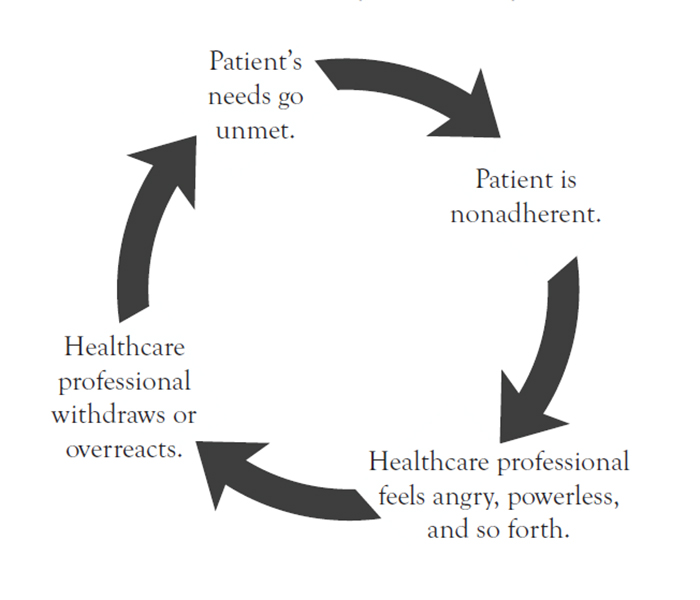 |
Healthcare Professional Strategies to Stop This Cycle
|
At times, healthcare professionals may feel unable to "allow" a patient to be nonadherent. This situation might occur when the healthcare professional has some commonality with the patient, such as being the same age as the patient or having a parent who died of the disease the patient has. Healthcare professionals who feel powerless in the face of a patient's nonadherence may push the patient to adhere while assuming decision-making responsibilities that belong to the patient.
Healthcare professionals can be key players in enhancing adherence on the part of their patients. By establishing rapport and creating trust, they present themselves to their patients as informed and knowledgeable persons who can answer questions and offer ways to adhere to plans of care. Healthcare professionals can reassure patients that it is not always easy to change long-term behaviors and gently reinforce why some changes may be necessary. Providing their patients with education as to the reason for certain treatment regimens is something healthcare professionals are well equipped to do. Often patients are more likely to follow through on their treatment requirements when they fully understand the reason and importance of what they are doing.
Patients benefit from the help of family and friends; healthcare professionals can assist their patients in obtaining support from these individuals. If there is a particular part of the treatment that goes against the patient's belief system in some way, the healthcare professional can help explain this to the healthcare team and together they (including the patient) can try to come up with an alternative intervention. Healthcare professionals implement their role as a patient advocate when they assist in these situations.
In addition to being professionals with a job to do, healthcare professionals are also individuals with their own belief systems. When patients are nonadherent, healthcare professionals can take it personally and react poorly in the situation. It is helpful for healthcare professionals to examine their reactions and why the patient may be acting in this way.Table 3 provides some suggested healthcare professional interventions along with their rationale for working with patients who are nonadherent.
INDEPENDENT HEALTHCARE PROFESSIONAL INTERVENTIONS FOR PATIENTS WHO ARE NONADHERENT AND THEIR RATIONALE
| Independent Healthcare Professional Interventions | Rationale | ||||
|---|---|---|---|---|---|
| Develop awareness of feelings toward patients who are nonadherent with their treatment regimens. | If unaware of personal feelings toward patients who are nonadherent, there is the possibility to be unaware of feelings of anger and/or powerlessness toward patients. This may a withdrawal from the patients and thus their needs will go unmet. | ||||
| Develop a trusting relationship with patients. | Trust is basic to a therapeutic relationship. The quality of the healthcare professional-patient relationship has been shown to be a powerful predictor of adherence. | ||||
| Assess patients' mental status. | Several studies have shown that clinical depression is a risk factor for nonadherence. | ||||
| Explain clearly why the treatment is necessary and what to expect (e.g., delayed benefits, general side effects). Ask the patients to identify benefits of treatment and how likely they think it is that there will be consequences of the current illness or health problem (perceived susceptibility and perceived severity). | A complicated or demanding treatment plan is an ordeal for even the most motivated patients. Patients need to understand why the plan is necessary; otherwise, they have little incentive to follow through with it. | ||||
|
| ||||
| Teaching should be aimed at the patients' learning level. |
| ||||
| Encourage patients to report problems with their treatment regimen, such as any unwanted or unexpected side effects, before adjusting or stopping it. | Patients often have valid reasons for not following a treatment plan. The better the understanding of patients' concerns about their treatment regimen, the more likely its importance will be explained. | ||||
| Encourage patients to request the support and help of family or friends. | If family members or other caregivers are not providing direct care to patients, and if patients are having difficulty following through on taking medications or other therapies, family members may be helpful in reminding patients to take their medications. | ||||
| Communicate concerns about the patients' nonadherence with other members of the healthcare team. Revisit the facility's philosophy about patient-centered care. | The healthcare team may detect and help solve nonadherence problems, including health system problems as well as patient issues. |
Patients do have the right to choose their own treatment and make their own decisions unless their choices will harm themselves or others. However, healthcare professionals and other clinicians may have a better knowledge base about treatment options. The healthcare professionals' role is to educate patients so that they can make an informed choice and not to assume patients do not know what is best for themselves. Walker outlined four basic philosophical orientations for clinician-patient relationships related to adherence [24].
The paternalism model is based on the expertise of the clinician, coupled with a grounding in beneficence (the doctor or healthcare professional knows what is best for the patient). This framework often conflicts with the concept of patient autonomy. This model is most acceptable in emergency situations and to value-neutral, technical decisions. There has been a shift in healthcare in recent decades toward more patient-centered, autonomous decision making.
The patient has absolute autonomy and absolute rights over decisions regarding their body. The patient can assess alternatives, and healthcare staff members are obligated to adhere with these wishes.
This relationship model is market-based. Healthcare is seen as a commodity with the patient as a consumer. This relationship model tends to undermine the caregiver ethos by encouraging emotional disengagement.
Also known as the reciprocal model or negotiated contract model, the shared decision-making model lies between the extremes of paternalism and radical individualism. It is rooted in the concept of shared humanity in all participants. It emphasizes the relationship to the patient, not the disease.
Holistic healthcare professionals, understanding the experience from their perspective, work with the patient. They recognize that the burden of responsibility for the ultimate decision and change belongs with the patient. The healthcare professional's duty is to educate and empower the patient.
Some technology-based interventions, such as reminder apps on a cell phone or digital patient education are becoming more common, but do they really work? Some clinical trials have been examining the effectiveness of smart phone reminders and education for mental health patients. One meta-analysis examined numerous clinical trials, and the adherence and improvement in behavior was not consistently improved [25]. Mental health patients often drop out of programs or trials, and low levels of adherence are seen as common for this population. Healthcare professionals can only continue to offer education and support for the patient and their family.
Michael Longfellow is a 60-year-old male patient who was admitted to the hospital after he fell and broke his hip. He had been helpless at home for several hours after the fall because his wife was away from the house. When she returned and found him, he was immediately brought to the hospital by ambulance. On the day of admission, surgical repair was performed.
After surgery, Michael was disoriented for several days. He was confused, belligerent, and had visual hallucinations. Medication for agitation was required some of the time. Michael's blood pressure and pulse rate were high. Eventually, his mental status cleared and the remainder of the postoperative period went smoothly. Michael's incision began healing and his vital signs became stable.
Pain management, however, remained a problem for Michael; it was difficult to develop a pain management regimen that enabled Michael to experience pain relief. He was unwilling to practice coughing or deep breathing as recommended because of reported pain. It was a constant struggle to assist him with ambulation exercises, although he had been informed of the dangers from immobility many times. He developed pneumonia and his hospitalization continued.
His wife and adult children rarely visited and were unwilling to talk with staff members. Michael reported that he had not worked for years and relied on his wife for much of his care and support. He gave vague reasons for this situation, stating that he had been laid off and that there were never any jobs in his field of employment.
The healthcare professional staff began to be concerned as time passed and Michael did not appear to be assuming responsibility for his recovery. He, on the other hand, was eager to return home and pressured his physician to let him go prematurely. The staff called a patient care conference to discuss the discharge plans for Michael.
During the conference, several of the healthcare professionals on the evening shift expressed concern that Michael would not be well taken care of if he were to return home at this time. They had met his wife because she visited in the evening after work. They described her as "cold" and "mean." They were sure that she would provide no assistance to Michael, who would be forced to fend for himself at home.
The night healthcare professionals described ongoing episodes of insomnia that the patient had experienced since his admission. One of the healthcare professionals had found Michael attempting to smoke in his room. She stated that he drank cup after cup of coffee whenever he could. She thought that he was simply a patient who was nonadherent with his treatment plan and should be discharged as soon as possible with home care assistance.
One of the healthcare professionals mentioned the possibility that Michael might have an alcohol use disorder. She cited his delirious episode after admission, his low pain tolerance, and the dysfunction in the family as possible indicators that he might have a substance use problem. The physician added that the hypertensive episode after surgery and the insomnia supported that assessment.
The social worker remembered that Michael's wife had bitterly discussed with her Michael's lack of employment and his previous falls. The social worker admitted that she had focused on the wife's hostility instead of on the possibility of an alcohol use disorder. She added that the behavioral habits of smoking and excessive coffee drinking have been linked in the literature to problem drinking.
It was agreed that the social worker would meet again with Michael's wife and discuss the possibility that Michael has an alcohol use disorder. With the information from that interview identifying Michael with a pattern of problem drinking, it was easier to approach Michael about his problem and he was, in fact, assessed and referred for treatment of an alcohol use disorder.
What are the staff's issues regarding Michael's nonadherence to his treatment plan?
What are some approaches that the healthcare professionals can use when caring for patients who are nonadherent?
The evening staff healthcare professionals who described the patient's wife as cold and mean were clearly angry. If they had examined their feelings closely, they might have discovered that they were angry with the patient for his unwillingness to participate in recovery. It is often easier to be angry at a healthy, and distant, family member than to be angry with the patient. It can be difficult for healthcare professionals to accept their anger toward a patient who is ill and with whom they interact on a daily basis. It seems like the night healthcare professionals felt little compassion for this patient. They were most likely dealing with feelings of powerlessness. Michael was a patient who ignored the rules and the healthcare advice offered to him. Powerlessness is difficult for anyone to experience and is most often masked by anger and rejection. When staff learn how to use techniques of brief assessment and intervention with patients who have alcohol problems and see their role in patient-centered care more clearly, they will feel less powerless.
Most of the issues of nonadherence in this case study may be attributable to the patient's unrecognized alcohol use disorder. Michael was unwilling to adhere to treatment recommendations because of his as-yet-untreated alcohol use disorder. His wanting to leave the hospital may be, in large part, motivated by his desire to have easier access to alcohol. If he had been discharged to home without treatment of this problem, his chances of a successful recovery would have been low. In addition, his alcohol use would have placed him at risk for more falls and other physical problems.
In this example, the staff needed to learn to look beyond Michael's nonadherent behavior and find out what was really occurring. He was certainly not following the treatment plan, but it was not simply negativity. There was an unidentified problem beneath the surface that needed resolution before Michael could address his nonadherence.
Family issues in this case study should not be overlooked. The wife and adult children should be included in discussions, with some focus on their own possible health issues, needs, and feelings as well. Further assessment and referral may be appropriate for the entire family. Because adherence to the treatment plan will be critical for a successful outcome for Michael, paying attention to family issues interfering with adherence is important.
Much of the time, the healthcare team is asking the patient to make significant changes in a lifelong pattern of behavior. This is not easy for anyone. Creating attainable short-term goals for which the patient can experience success is helpful in ultimately reaching long-term goals. The healthcare professional provides thorough and appropriate education and training on any aspect of the patient's care plan to enhance cooperation with the recommended treatments and interventions. Use of the Internet or smart phone resources can help remind and educate the patient. Teaching family and friends to be alert for signs of changes in behavior is part of a holistic approach. Establishing a strong sense of rapport is essential to teaching being effective.
It is also useful to discuss with the patient why adherence is difficult for them. Finding the root of the problem and addressing it directly can help with optimizing the patient's ability to carry out the plan of care and achieve the desired health benefits. For example, the patient may not remember to take a prescribed medication because it is effectively working and there are no symptoms triggering the need to keep taking the drug. The healthcare professional can assist the patient with finding other reminders as to when the medication should be taken. Many people have cell phones equipped with alarm features, so teaching the patient how to use this alarm function may be a constructive way to gain adherence to medication use.
Healthcare professionals who acknowledge their own problems make it less likely that those problems will interfere with helping the patient. Healthcare professionals, just like patients, may find it difficult to follow many health-related behaviors. Adherence on the healthcare professionals' part helps patients see congruence in what is practiced by others and what is asked of them. However, examining their feelings is not always the easiest thing for healthcare professionals to do. Because patients present with many different issues, it is likely that situations will arise when the patients' problems match ones that healthcare professionals, themselves, are experiencing. Self-awareness is critical for successful interactions in these situations. Healthcare professionals are not perfect, and they may have unsolved problems and issues, but knowing what they are is important.
There is also the recognition that patients do have the right to nonadherence. Sometimes the patient is making choices for reasons the healthcare professional has not considered. It is essential to examine why the patient stopped (or never started) the treatment as prescribed. There is also a time when patients will have to live with the consequences of their own actions. The self-aware healthcare professional knows that there are limits to what teaching and explaining can do to change the health behaviors of others.
Illness poses a severe threat to a person's security, self-esteem, and autonomy. It results in a loss of self-control and a fear of becoming helpless and dependent. The healthcare system may also place patients in child-like positions. The resulting anxiety may prompt a regression to manipulation as a coping mechanism, even in patients who do not typically demonstrate manipulative behaviors.
Before healthcare professionals can intervene effectively, they must understand not only what manipulation is and how they respond to it but also where it begins. How does manipulation become entrenched as a need-gratifying mechanism?
The use of manipulation as an adaptive, need-gratifying mechanism starts early in life. It is defined as an automatic behavioral pattern that infants use to get their basic needs met. They manipulate without any regard for the needs of others. In newborns, who are utterly dependent on others, the use of manipulation is acceptable and, in fact, vital. It is a matter of survival.
As children grow and develop, they test a variety of adaptive maneuvers to manipulate the environment to gratify their needs. If a child's unacceptable behaviors are met with clear and consistent limits delivered by primary caretakers with unconditional love and acceptance (of the child if not of the behavior), then the child will gradually develop a sense of self-esteem and self-control. Slowly, children learn to replace manipulation with more independent, adaptive behaviors.
If, on the other hand, a child's first limit-testing manipulative efforts are met with inconsistent limits or with no limits at all, with conditional love, and with lack of acceptance of the child, then the child will not learn how to fulfill their needs and how to gain love and acceptance from others [12].
Manipulation, learned early in life, is a process that occurs consciously or unconsciously in virtually all interpersonal interactions. When manipulation is used in an adaptive sense, it is just one of many behaviors that a person can call on to ensure that their needs are fulfilled. It is neither the only need-gratifying behavior nor the dominant one. For manipulation to be considered maladaptive, it depends on the:
Extent to which it is used as a dominant need-gratifying mechanism
Degree to which a person is aware of using it
Degree to which the person is self-oriented and not oriented to others
Degree to which others are treated as objects
Effect on others, such as the person who has been manipulated feeling angry but not necessarily being certain as to why
Unquestionably, the word manipulator has taken on a derogatory or pejorative connotation. However, the fact is that everyone manipulates at times as a way of ensuring that needs are met. It is important to understand that isolated instances of manipulation do not make a person a manipulator. It is when manipulation as a need-gratifying mechanism becomes an adult behavioral pattern that it is viewed negatively. When it is adopted as the primary means of decreasing anxiety without the opportunity of learning or experiencing personal growth, then it is problematic.
For the same reasons younger patients are prone to manipulation, anxiety, lack of control in their environment, low self-esteem, and feelings of insecurity, the elderly are also likely to use such behavior to meet their needs. Although healthcare professionals working with geriatric patients may understand why it is happening, it is no less frustrating to manage. It is important for the healthcare professional to provide information to this population about reasonable expectations and then make every effort to meet those expectations. If something has been promised that cannot happen, the healthcare professional should explain to the patient why this change must be made. Open and honest communication is important in establishing trust and modeling straightforward behavior. One healthcare professional notes that consistent therapeutic communication and remaining accountable decreases the likelihood of allegations of neglect or abuse [26].
Healthcare professionals may overuse the term manipulative. After a difficult day or after caring for a string of patients with particularly taxing behaviors, a healthcare professional may be prone to assign the label manipulator to the patient who makes that one final demand that sends the healthcare professional over the edge or to the patient who is just a little too insistent in their self-advocacy. Patients who use manipulation have many requests that begin to seem unreasonable. Asking for a fresh beverage is understandable but asking for another within an hour and then needing more ice, then a pain pill, and then wanting to have a pillow fluffed becomes too much [27]. Healthcare professionals who work in correctional or psychiatric settings often experience this manipulation as a stressor [28]. If the term manipulative is to have clinical meaning, its characteristics must be understood.
Patients who use manipulation are often charming, entertaining, and intelligent. They rarely see themselves as having a problem and are unlikely to seek help on their own. In fact, many individuals who demonstrate manipulative behaviors are loathe to change, even when confronted, because these behaviors get their needs met [5]. When the harmful effect on others is pointed out, these patients may feign guilt or remorse because they are aware that these are the socially acceptable responses. They will not actually feel those feelings, however. Patients with dominant manipulative traits do not have a superego (concerned with moral behavior) strong enough for pangs of conscience to be genuine.
The reaction of healthcare professionals faced with such situations is, understandably, negative. It is sometimes possible to detect manipulation by virtue of a negative reaction to a patient's interaction or request. Sensing that something does not ring true can assist the healthcare professional to suspect manipulative behavior. Universally, healthcare professionals, like most of the population, want to avoid interaction with patients who regularly use manipulation.
There are a variety of measurement tools available to attempt to decipher personality traits. Exploring manipulative behavior is of interest to many, especially because of its apparent connection with delinquent and/or criminal behavior later in life. Bergstrom and Farrington investigated whether the use of one or more scales could be predictive of psychopathology in adulthood [29]. The data were supportive of a connection between high scores on callous-unemotional traits combined with high scores on daring-impulsive ones, pointing to a higher risk in childhood and outcomes as adults that were below normal.
A person has needs to be met but cannot trust the environment to meet them consistently. The ensuing anxiety causes the person to fall back on the earliest need-gratifying mechanism—adaptive maneuvering and manipulation to ensure that their needs are met. If the manipulative behavior is effective, then the anxiety temporarily decreases. The person's needs have been met. However, the pattern of manipulation has been reinforced.
When the same person gets a negative response, they may become angry and frustrated, and anxiety skyrockets. The person again tries desperately to manipulate the environment in an effort to regain control. The pattern is set, especially when the manipulative behaviors work.
Lacking basic trust, the person is caught in an endless cycle of having to resort to manipulative behaviors to ensure that their needs are met. In the process, however, individuals are likely to alienate those around them and generate mistrust from other people. The issue of this loss of trust is key to understanding the pathology of manipulation. The patient who uses manipulation in a maladaptive way has little concern for the wants and needs of other people. Because individuals who use manipulation do not trust their own feelings, they cannot trust others. This lack of trust leads to a sense of loss of control, and the individual tries to regain a sense of self-mastery by controlling others.
The patient who exhibits manipulative behaviors is uncannily adept at seeking out the unique weaknesses and vulnerabilities of others and using those weaknesses and vulnerabilities to gain control. Their manipulative behavior can be active or passive.
Active manipulation may involve any of the following behaviors:
Making demands: "I want my medication at 9 o'clock, not 8 o'clock. I don't care about your rules!"
Violating rules and routines: "Oops! I forgot I was supposed to be measuring my urine. Guess I'll need to stay another day so you can get a complete sample."
Making threats: "If you don't get that guy and his obnoxious family out of my room this minute, I'm going to tear up this place – and you along with it!"
Manipulative behaviors can also be passive and more subtle:
Eliciting pity: "Can't you understand how hard it's been for me lately? My husband is leaving me for another woman, my two kids are out every night until 1:00 a.m., and my son wrecked a brand-new car last weekend. Wouldn't you drink too?"
Ingratiating and flattering: "You're the only one on this unit who can possibly understand me. I don't even know why you're working here – you're so much smarter than the rest of them. And prettier too."
Evoking guilt feelings: "Well, if you had come in here to talk to me at 2:15, when you said you would, I wouldn't have gotten so depressed, and I wouldn't have had to cut my wrist."
Abusing compassion: "You said you understood how hard it was for me to be in this hospital, so I was sure you'd understand why I needed to sneak out this morning. I'm back now, so take it easy. Why do you have to search me? You said you trusted me!"
Attempting to exchange roles and become the helper's helper: "I heard you tell one of the healthcare professionals that you're having trouble with your son. I can't believe he doesn't appreciate having a mother like you. I'm about his age, I'll bet. Tell me what he's doing. Maybe I can help."
Pitting staff members against each other: "I couldn't get that other healthcare professional to understand why she should persuade the doctor to discharge me tomorrow. She said not to discuss it with you because you're too new to understand the rules yet. But I know you understand my situation. Will you explain it to my doctor? And pick a time when she's not around to interfere."
Questioning competence or authority: "My doctor said that I could have another sleeping pill if the first one didn't work. Can't you even read a chart? Well, you're not in charge around here anyway. We'll see what happens to your job when the unit manager comes in tomorrow."
In each of the foregoing examples, patients seized on a particular need of the healthcare professional (the need to be professionally competent; to maintain a safe, consistent environment; to be viewed as empathic and understanding) and geared their behavior to exploit the healthcare professional's weaknesses or therapeutic vulnerability.
When healthcare professionals realize they have been successfully manipulated, their likely response is a range of negative feelings and behaviors, including anger, frustration, indifference, and withdrawal. Although patients with manipulative behaviors will enjoy these responses as signs of their power, they will also feel an inward sense of increasing anxiety because once again they have successfully managed to manipulate someone. Can no one be trusted? Will no one ever be able to see through them and give them what is truly needed – a sense of realistic limits and a genuine feeling of self-control? The vicious cycle of manipulation can play out repeatedly between healthcare professional and patient when manipulative behaviors are not accurately identified, and healthcare professional interventions are not put in place to halt the cycle. It is essential that firm, realistic limits be set and then followed with all patients. The limits should be communicated clearly and openly, with an appropriate rationale. Although there should be consequences for nonadherence, they should not be punitive but should be set to reflect the best interests of the patients.Table 4 summarizes steps that are helpful in setting limits for patients who act in a manipulative manner.
TEN STEPS TO SETTING LIMITS WITH PATIENTS WHO EXHIBIT MANIPULATIVE BEHAVIORS
|
If healthcare professionals are to stop the cycle, self-awareness is vital. If they have difficulty with their own self-esteem, they will be vulnerable to manipulative behavior. The key is for healthcare professionals to be aware of their needs so they will know when they are being exploited. They also need to be aware of their own responses, such as feelings of anger, the need to withdraw, frustration, or loss of objectivity, as indicators that they are being manipulated. Only then can they be effective in helping patients find more adaptive ways of getting their needs met.
Patients who use manipulation as a means to have their needs met present a challenge for healthcare professionals. Patients may be unable and unwilling to recognize their maladaptive manipulative coping mechanism. Even when the healthcare professional points it out, the patient may not be willing to change. As noted previously, manipulation is inherently rewarding. However, manipulation also has a way of alienating others and making it impossible for the patient to form meaningful relationships. The healthcare professional who can help patients recognize the effects of their manipulative behavior and find alternative need-gratifying mechanisms will do much to improve their patients' quality of life. Role-modeling straightforward behavior is an effective way to encourage patients to lessen their manipulative behaviors.
Gaining the patient's trust, although difficult, and sometimes not possible, is something the healthcare professional should work toward. Trust-building behavior includes being on time for treatments or other appointments with the patient, never promising something that cannot be delivered, and remembering things the patient has related. In addition, healthcare professionals must accept that patients may say hurtful things and not take them personally; patients who use manipulation make such remarks to everyone. Self-confidence on the part of the healthcare professional is important because patients who use manipulative behaviors will try their best to gain power by undermining the healthcare professional's knowledge, skill, and competence.
Consistency will help gain rapport with patients using manipulation. All staff members must agree on a plan and follow through with it. Individually, healthcare professionals must remain consistent day to day in their expectations and responses. See Table 5 for healthcare professional interventions that may be useful in caring for patients who use manipulative behaviors.
HEALTHCARE PROFESSIONAL INTERVENTIONS AND RATIONALE FOR MANAGING PATIENTS' MANIPULATIVE BEHAVIORS
| Independent Healthcare Professional Interventions | Rationale | |||||||||||
|---|---|---|---|---|---|---|---|---|---|---|---|---|
| Establish a trusting relationship. |
| |||||||||||
| Help patients recognize their manipulation and potential causes of their behavior. | Patients cannot be helped to find more adaptive ways of living if they do not recognize their current behavior as a problem and take responsibility for the circumstances in which they find themselves. | |||||||||||
| Provide a consistent environment. |
| |||||||||||
| Formulate short- and long-term goals to ensure that every member of the staff carries out the care plan as consistently as possible. |
| |||||||||||
| Recognize and refuse to respond to manipulation. | Refusing to support the manipulative behavior tells patients who are manipulative that you, the healthcare professional, cannot be used as an object. They will have to find another way to get the healthcare professional to meet their needs. | |||||||||||
| Do not accept the behavior but accept the patient. | Patients who manipulate are in desperate need of acceptance and positive regard. The healthcare professional should recognize the patient's behavior as manipulative rather than label the patient as a "manipulator." | |||||||||||
| Help the patient to understand the impact of their behavior on others. | Do not assume that empathy comes naturally to patients who manipulate. Help them develop an awareness of their impact on others by being honest about how it feels to be manipulated. | |||||||||||
| Set limits that are reasonable, clear, firm, and consistent. | Although patients will most likely rail against limits, they will be enormously relieved by them. Limits will provide the external control patients need until they can develop internal control. | |||||||||||
|
Provide positive reinforcement every time the patient is able to communicate needs directly, take responsibility for their own actions, or accept limits. | The patient needs to recognize not only unacceptable behavior but also acceptable behavior. Reinforcement of positive behavior is likely to elicit more of the same. |
Manipulation tactics can include flattery, interest, or praising one healthcare professional while degrading another healthcare professional. This attempt at control is usually the means to an end; there is some goal in mind for power, entertainment, or privileges. Manipulation is so prevalent in some settings that healthcare professionals have developed theories and strategies to better manage the difficulties associated with these patients' behaviors [28].
Intentionally developing social maturity, which includes the emotional strength and ego to recognize and deflect manipulation, is an important goal for healthcare professionals. Healthcare professionals' benefit from learning to recognize intrinsic rewards such as knowing they have made a difference and helped someone else transcend to a higher level of functioning. For patients who use manipulation, healthcare professionals must clearly set the healthcare professional-patient relationship with appropriate professional boundaries and maintain those boundaries [28].
Patients often use a combination of charm and manipulation to disturb the flow of care on a healthcare professional unit. These patients can be difficult. One moment one healthcare professional will be the only healthcare professional who can care for the patient and then the patient will refuse to see that healthcare professional [28]. Reflection on each experience with a fellow team member can be helpful for healthcare professionals. Meeting frequently to ensure all staff members (even non-healthcare professional staff) are applying the same rules to patients who manipulate is recommended. It is critical to understand that the underlying aspect of this personality trait is stable and enduring. It is difficult to change a pattern of behavior, but consistency and a caring and professional approach must be maintained to begin to make a change.
The management of "difficult" patients leads to frustration, stress, and burnout for healthcare professionals. The team needs to work cohesively and reflectively and offer support to all team members. Training to work with patients who use manipulation will reduce burnout and increase job satisfaction, while continuing to provide care to all those who need it. Mentoring healthcare professional colleagues is highly recommended for situations involving patients with manipulative behaviors.
David Andrews, a single, 32-year-old man, has been admitted to the general surgery unit for a hernia repair. His healthcare professional, Bonnie Blake, introduces herself and welcomes him to the hospital. Bonnie is a recently divorced 28-year-old and has been a healthcare provider for about 6 months. She explains to David that she will need to ask a series of questions, some of which he may already have answered, but that she would like to hear his answers herself. David says he will be very happy to answer questions asked by such a cute healthcare provider. He tells Bonnie that he hopes she is his healthcare provider the whole time he is in the hospital and will meet his "every need, if you get what I mean!"
Discussion : How should Bonnie interpret David's last remark? It is hard to be sure of how to interpret the remark at this point. It is possible that this comment can be taken as harassment, but it is still too early to make a definitive judgement.
Bonnie begins her assessment by asking David ordinary questions such as his name, address, date of birth, and marital status. Each time he answers, David adds a short comment such as, "Yes, I already answered that one" or "Seems like you people could pass along information better; are you people all incompetent?"
Discussion : The best response to David's comments at this point is: "I do understand your frustration, there aren't too many more items." It is important to acknowledge that the process is cumbersome without taking sides or "scolding" the patient.
When asked the question about marital status, David replies, "I'm single, who wants to know?" and gives Bonnie a wink. He then asks her what her marital status is.
Discussion : The best response to David's comments at this point is: "That is not the purpose of this interview." Providers should be straightforward without being rude or flirty or creating a bargaining situation.
Bonnie is becoming increasingly uncomfortable and decides she needs to take a short break from this interaction. She tells David she needs to check on something and will be back as soon as she can. As she leaves the room, David calls out, "You hurry back, you sweet thing, I'll miss you while you are gone!"
Bonnie finds her supervisor and tells her that she is very uncomfortable with David. She asks if she can be reassigned to a different patient and let Joe, another provider on the unit, take over for her with David. The supervisor tells Bonnie that it would be better if she learned to manage patients with manipulative behaviors and that, for now, the assignments remain as they are. The supervisor does spend a bit more time with Bonnie and asks her what, specifically, is making the interview so uncomfortable and what she thinks would be the best thing to do about her discomfort.
On hearing her supervisor tell her that she will continue as David's healthcare provider, Bonnie's first reaction is to plead her case and ask her supervisor to reconsider.
Discussion : The supervisor's best response at this point is: "Tell me more about your feelings of discomfort." This will help Bonnie to focus on the feelings she is having about the situation and hopefully what is at the root of her discomfort.
Bonnie returns to the assessment room to continue the interview.
Discussion : The best way to resume the interview once Bonnie has returned to the assessment room is: "Sorry for the delay. Let's start where we left off." At least to begin with, it would be best for Bonnie to start with a clean slate and not address David's previous behavior. If it continues, then Bonnie will need to say something, but it would be best to first wait and see how things progress from the new starting point.
Why is Bonnie feeling so uncomfortable?
More than likely, Bonnie is uncomfortable because David is behaving inappropriately, and she is unsure what to do about it. Although David is cooperating by answering the questions, he is making remarks that undermine Bonnie's confidence in her ability to provide competent care. He is putting their relationship on a personal, rather than professional, level, and is treating her as a potential date, not his healthcare provider. As a new provider, it is normal that Bonnie does not yet have complete confidence in her abilities. On top of that, as a recently divorced woman, she possibly has doubts about her desirability as a woman. Because his behavior is inappropriate for the setting, Bonnie cannot be sure what David means by his flirtatious remarks; does he actually find her attractive or is he teasing her? With the ambiguity and Bonnie's lack of experience, it is not unusual that she would become anxious in her interaction with David.
Why is David behaving the way he is?
David may be nervous about having to be admitted to the hospital. The behavior he is exhibiting might demonstrate an attempt to gain control of an unfamiliar situation. He is manipulating his healthcare professional in such a way that gives him the upper hand, in his opinion at any rate. Or David might simply be used to this sort of interaction under any circumstance. Whatever his reasons for this manipulative behavior, David will have difficulty getting his needs met in this manner. Instead of gaining the support and help he needs, he alienates people and causes them to avoid him.
Did Bonnie make a good decision to "take a break?"
Given the fact that Bonnie is becoming extremely anxious and feels like she is losing control of the interview, taking a break is not an inappropriate decision. Although there are other ways to deal with the situation, Bonnie has found a way to interrupt the seemingly downward turn that the interaction was taking.
Did the supervisor make the right decision in having Bonnie continue to work with David?
At least for the present, the supervisor seems to be making the right decision. Bonnie will encounter all sorts of people in her career as a healthcare professional and will not have the luxury of changing assignments every time she is uncomfortable with one of them. She needs to develop the skills to work effectively with all types of behaviors exhibited by patients. Given his manipulative behaviors, the patient has made her uncomfortable, but her supervisor sees this as a good learning experience and offers support by talking over the difficulties Bonnie is encountering.
Adherence: The term adherence describes the degree to which a person's behavior corresponds with the agreed recommendations from a healthcare provider. Adherence acknowledges that the patient is part of the decision-making process. To promote adherence, hospitalization must become an experience in which patients maintain control over most of what happens to them. Healthcare providers are finding new ways to alleviate the dilemmas that patients face when hospitalized. An example is the patient-controlled analgesia pump for self-administration of pain medication. Use of this device reduces the patient's dependence on the healthcare professional for comfort and, in many cases, reduces anxiety about pain control.
Compliance: The term compliance is used to describe the degree to which patients follow their healthcare providers' recommendations. It implies a patient-healthcare provider hierarchy, or a power differential in the relationship, in which the patient is relegated to a subordinate role. Some healthcare professionals believe this has a negative influence on patient compliance with the healthcare provider's recommendations.
Noncompliance: The North American Nursing Diagnosis Association (NANDA) definition of noncompliance is when the actions of the patient do not follow the health-promoting or therapeutic plan agreed on with the healthcare team [31]. A plan of action for involvement and agreement with the management plan is needed.
Healthcare professionals should never underestimate the potential for violence; assaults by patients—young or old, male or female—can occur for many reasons. This course explored how healthcare professionals will encounter difficult or hard to manage patients during their career, including workplace violence, non-adherence to medical treatments, and manipulation of caregivers and the treatments and skills needed. This course demonstrated how healthcare professionals can avoid potentially violent situations and work with difficult patients by being prepared and recognizing the signs and risk factors for these occurrences. It also explores how healthcare professionals must deal with their own feelings toward difficult patients while treating them. De-escalation skills, diagnosis, preventative measures, training, and planning are all presented in this course to help healthcare professionals respond to difficult patients and ensure a healthy and safe environment.
1. Occupational Safety and Health Administration. Guidelines for Preventing Workplace Violence for Healthcare and Social Service Workers. Available at https://www.osha.gov/sites/default/files/publications/osha3148.pdf. Last accessed December 31, 2024.
2. Sari H, Yildiz İ, Çağla Baloğlu S, Özel M, Tekalp R. The frequency of workplace violence against healthcare workers and affecting factors. PLoS One. 2023;18(7):e0289363.
3. National Institute for Occupational Safety and Health. About Workplace Violence. Available at https://www.cdc.gov/niosh/violence/about. Last accessed December 31, 2024.
4. Lim MC, Jeffree MS, Saupin SS, Giloi N, Lukman KA. Workplace violence in healthcare settings: the risk factors, implications and collaborative preventive measures. Ann Med Surg (Lond). 2022;78:103727.
5. Halter MJ. Varcarolis' Foundations of Psychiatric-Mental Health Nursing. 9th ed. St. Louis, MO: Elsevier; 2021.
6. Kafle S, Paudel S, Thapaliya A, Acharya R. Workplace violence against nurses: a narrative review. J Clin Transl Res. 2022;8(5):421.
7. Chakraborty S, Mashreky SR, Dalal K. Violence against physicians and nurses: a systematic literature review. J Public Health (Berl). 2022;30(8):1837-1855.
8. Jones CB, Sousane Z, Mossburg S. Addressing Workplace Violence and Creating a Safer Workplace. Washington, DC: U.S. Department of Health and Human Services; 2023.
9. Small TF, Gillespie GL, Hutton S, Davis KG, Smith CR. Workplace violence prevalence and reporting in home health care: a cross-sectional survey. Home Health Care Manag Pract. 2023;35(1):31-39.
10. Urbanek K, Graham K. Workplace Violence Prevention Handbook. Milwaukee, WI: Crisis Prevention Institute; 2022.
11. Thomann S, Zwakhalen S, Richter D, Bauer S, Hahn S. Restraint use in the acute-care hospital setting: a cross-sectional multi-centre study. Int J Nurs Stud. 2021;114:103807.
12. Townsend MC, Morgan K. Essentials of Psychiatric Mental Health Nursing: Concepts of Care in Evidence-Based Practice. 7th ed. New York, NY: FA Davis; 2017.
13. The Joint Commission. R3 Report Issue 30: Workplace Violence Prevention Standards. Available at https://www.jointcommission.org/-/media/tjc/documents/standards/r3-reports/wpvp-r3-30_revised_06302021.pdf. Last accessed December 31, 2024.
14. National Institute for Occupational Safety and Health. Online Workplace Violence Prevention Course for Nurses. Available at https://www.cdc.gov/niosh/docs/2013-155/default.html. Last accessed June 18, 2026.
15. American Nurses Association; American Psychiatric Nurses Association; International Society of Psychiatric-Mental Health Nurses. Psychiatric-Mental Health Nursing: Scope & Standards of Practice. 3rd ed. Silver Spring, MD: American Nurses Association; 2021.
16. Stewart SJF, Moon Z, Horne R. Medication nonadherence: health impact, prevalence, correlates and interventions. Psychol Health. 2023;38(6):726-765.
17. Poonawalla IB, Chung L, Shetler S, Pearce H, Dixon SW, Racsa P. Medication adherence star ratings measures, health care resource utilization, and cost. Am J Manag Care. 2024;30(5):210-217.
18. U.S. Food and Drug Administration. Combating Antibiotic Resistance. Available at https://www.fda.gov/ForConsumers/ConsumerUpdates/ucm092810.htm. Last accessed December 31, 2024.
19. Centers for Disease Control and Prevention. Drug-Resistant TB. Available at https://www.cdc.gov/tb/topic/drtb/default.htm. Last accessed December 31, 2024.
20. Al-Ani A, Hammouri M, Sultan H, Al-Huneidy L, Mansour A, Al-Hussaini M. Factors affecting cervical screening using the health belief model during the last decade: a systematic review and meta-analysis. Psychooncology. 2024;33(1):e6275.
21. Alyafei A, Easton-Carr R. The health belief model of behavior change. In: StatPearls. Treasure Island, FL: StatPearls Publishing; 2024.
22. American Psychiatric Association. Diagnostic and Statistical Manual of Mental Disorders. 5th ed. Text revision. Washington, DC: American Psychiatric Association; 2022.
23. Jones CL, Jensen JD, Scherr CL, Brown NR, Christy K, Weaver J. The health belief model as an explanatory framework in communication research: exploring parallel, serial, and moderated mediation. Health Commun. 2015;30(6):566-576.
25. Gan DZ, McGillivray L, Han J, Christensen H, Torok M. Effect of engagement with digital interventions on mental health outcomes: a systematic review and meta-analysis. Front Digit Health. 2021;3:764079.
26. Kemerer DA. How to manage manipulative behavior in geriatric patients. Am Nurse Today. 2016;17(10):5.
28. Schoenly L. Manipulation: A Significant Stressor for Correctional Nurses. Available at http://correctionalnurse.net/manipulation-a-significant-stressor. Last accessed December 31, 2024.
29. Bergstrom H, Farington DP. Grandiose-manipulative, callous-unemotional, and daring-impulsive: the prediction of psychopathic traits in adolescence and their outcomes in adulthood. J Psychopathol Behav Assess. 2018;40(2):149-158.
1. American Medical Association Code of Ethics. Opinion 1.2.7: Use of Restraints. Available at https://code-medical-ethics.ama-assn.org/ethics-opinions/use-restraints. Last accessed June 19, 2026.
2. Kansas City Area Ethics Committee Consortium Center for Practical Bioethics. Guidelines for Providing Ethical Care in Difficult Provider-Patient Relationships. Available at https://www.practicalbioethics.org/wp-content/uploads/2021/10/Ethical-Care-in-Difficult-Relationships.pdf. Last accessed June 19, 2026.
Mention of commercial products does not indicate endorsement.